

On September 21, 2026, Governor Gavin Newsom proclaimed a statewide state of emergency in anticipation of a developing El Niño event that NOAA’s Climate Prediction Center projects has a greater than 90% chance of reaching “very strong” intensity this fall and winter, with a 69% chance of surpassing every El Niño on record since 1950. (https://www.gov.ca.gov/wp-content/uploads/2026/09/SIGNED_Super-El-Nino-SOE-9-21-26.pdf). For flood-control agencies, water districts, and infrastructure owners, the proclamation is less about disaster response than about clearing the runway for preparedness — and one directive in particular deserves close attention.
The Broad Strokes
The proclamation leans heavily on the state’s recent experience with atmospheric rivers, post-wildfire debris flows, and coastal flooding. It directs the Office of Emergency Services (Cal OES) to coordinate statewide preparedness (Paragraph 1), suspends competitive-bidding and procurement requirements so state agencies can move quickly on emergency contracts (Paragraph 2), and tasks the Department of Water Resources with staging flood-fight materials — sandbags, riprap, plastic sheeting, pumps — ahead of storms (Paragraph 5). DWR’s Division of Safety of Dams is also directed to reach out to dam owners about inspection and operational readiness (Paragraph 6), and Caltrans is required to deliver a prioritized list of at-risk highways, bridges, and drainage infrastructure within 30 days (Paragraph 10).
The Provision That Likely Matters Most for Flood-Risk-Reduction Work: Paragraph 3
Buried in the middle of the proclamation, Paragraph 3 is arguably the most consequential provision for anyone doing on-the-ground flood infrastructure work this fall. It directs the California Environmental Protection Agency and the California Natural Resources Agency — along with the boards, departments, and offices under them — to prioritize permitting, consultation, and technical assistance for local efforts to prevent or mitigate flooding, landslides, and mud and debris flows. The proclamation names specific categories of work these agencies are told to expedite, including levee and flood-management infrastructure repairs, debris removal, sediment management, bridge scour protection, and channel-capacity improvements — and, notably, vegetation management.
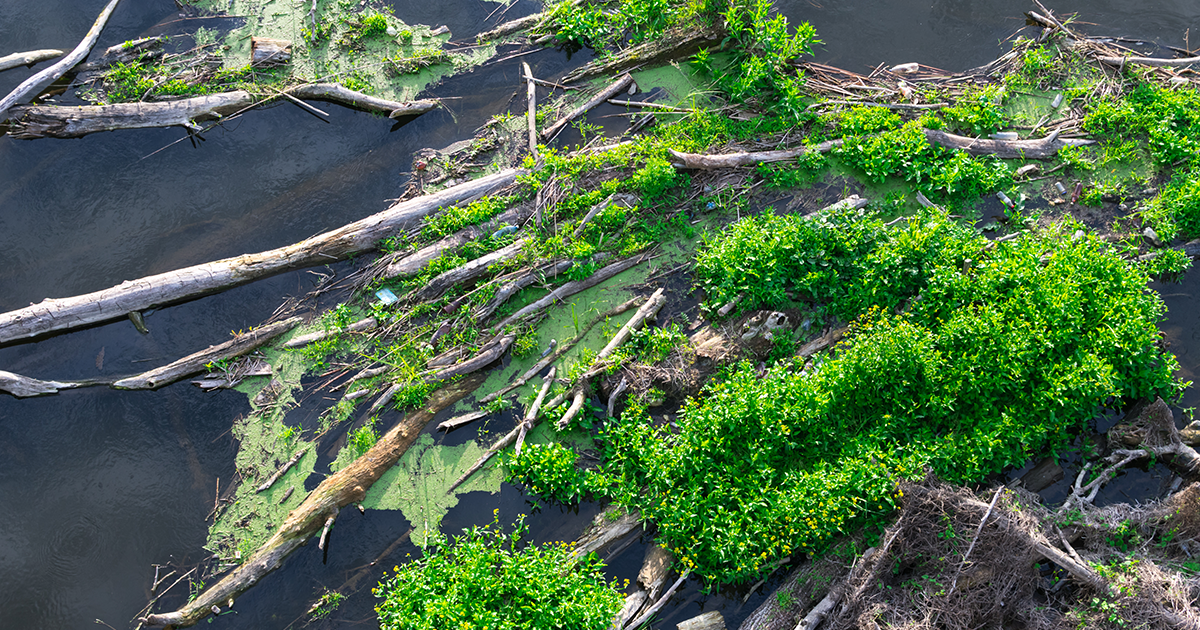
That vegetation-clearing language is worth pulling out on its own. Overgrown vegetation in and along waterways, channels, and levee systems is a recurring bottleneck for flood-control agencies: it reduces channel capacity, obstructs flow during high-water events, and often requires permits (CEQA review, Section 1602 streambed alteration agreements, Coastal Commission sign-off in coastal zones, etc.) that can take months to clear even when the underlying work is uncontroversial. By folding vegetation management directly into the list of activities state agencies must expedite, the proclamation gives local flood agencies a concrete hook to push CalEPA- and CNRA-affiliated permitting bodies — think the State Water Resources Control Board, regional water boards, and Fish and Wildlife — to move faster on exactly the kind of routine channel-clearing work that otherwise sits in a permitting queue.
The proclamation backs this up procedurally: state agencies are directed to work with local agencies to issue necessary permits “as quickly as possible,” including by identifying and invoking existing emergency authorities or other streamlined review pathways — language that gives agencies cover to use expedited or emergency permitting tracks they might otherwise be reluctant to invoke for routine maintenance work. There’s also a built-in accountability checkpoint: the Secretaries of CalEPA and the Natural Resources Agency must report back to the Governor’s office by October 16, 2026 on whether further action or emergency suspensions are needed to support this work — meaning agencies that want additional relief (beyond expedited processing) have a near-term window to flag it.
This state proclamation comes at a coincident time with recent actions by the Trump Administration. More than 1,600 critically imperiled species protected under the US Endangered Species Act (ESA) face losing further Federal protections following a new reinterpretation of the 1973 law by the Administration. A September 14 memo distributed to Fish and Wildlife Service (FWS) field offices by FWS director Brian Nesvik calls for a reinterpretation of what it means to “take” an endangered species. Under the ESA, “take” is defined as “to harass, harm, pursue, hunt, shoot, wound, kill, trap, capture, or collect, or to attempt to engage in any such conduct.” But the memo reinterprets the law to mean that harming or killing an endangered animal would no longer be considered illegal unless the action was specifically intended to cause harm or death. This means that we are currently in a window in California where we have far more flexibility under both State and Federal law, and importantly, that flexibility exists before the storms may be headed our way.
Practical Takeaway
For flood-control districts and local agencies sitting on deferred vegetation management or channel-clearing projects, the State proclamation is a signal — and a lever. The directive doesn’t waive permitting requirements outright the way Paragraph 2 waives contracting rules; it directs agencies to prioritize and expedite review, and to actively look for emergency or streamlined pathways. Agencies with shovel-ready vegetation clearing or channel-capacity projects should be raising them now with the relevant state permitting bodies, explicitly invoking Paragraph 3, while the October 16 reporting deadline creates a natural moment to press for anything short of emergency suspension that the ordinary expedited process doesn’t reach.